
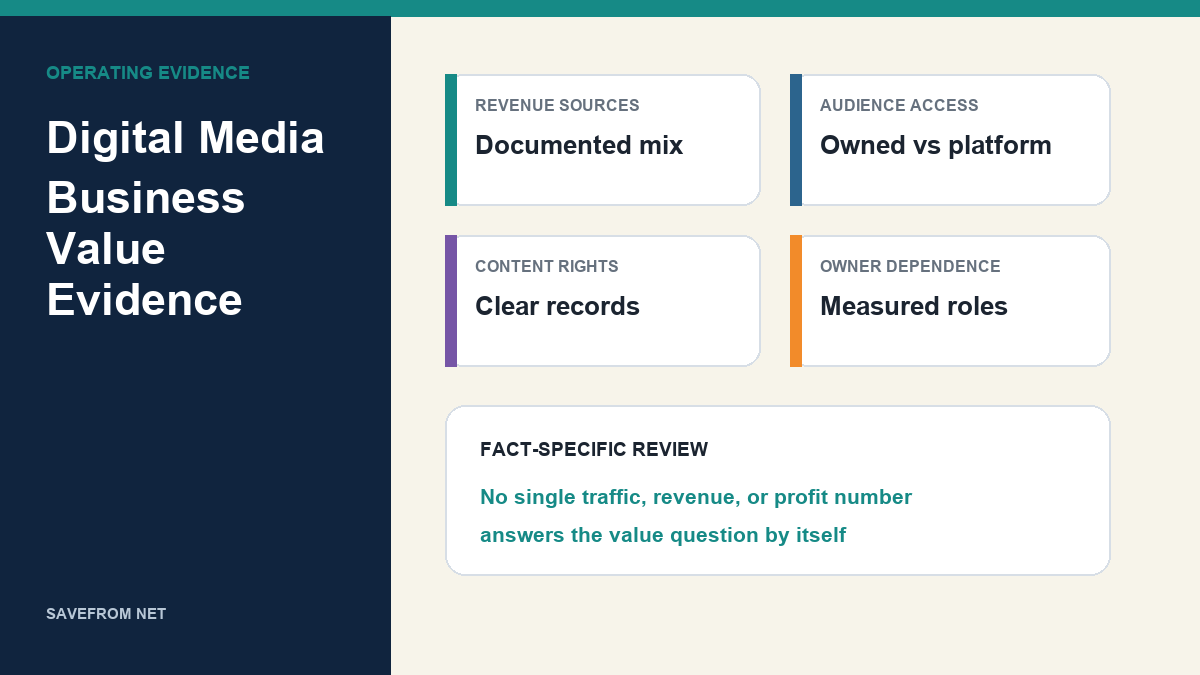
Understanding Digital Asset Valuation
When considering the landscape of modern enterprises, many operators wonder how abstract digital assets translate into tangible business equity. Unlike traditional brick-and-mortar operations with physical inventory, digital media entities derive their strength from content rights, audience retention, and consistent revenue streams. Evaluating these abstract components requires a structured approach to distinguish between transient traffic spikes and durable operational value.
Because every digital operation possesses a unique combination of revenue channels, subscriber demographics, and content archives, applying a universal standard is inherently flawed. Preliminary planning estimates must be strictly separated from a formal appraisal or transaction conclusion. Valuations are deeply fact-specific. To understand the intricacies, it is essential to look at the individual components that drive sustained digital operations, rather than relying on broad market generalizations.
Revenue Source Concentration and Platform Dependence
One of the most critical factors in evaluating a digital media entity is the concentration of its revenue sources. A business that relies entirely on a single advertising network or a lone affiliate program carries a significantly different risk profile than an enterprise with diversified income streams. Revenue source concentration often acts as a primary stress point when operations change hands or when market conditions shift.
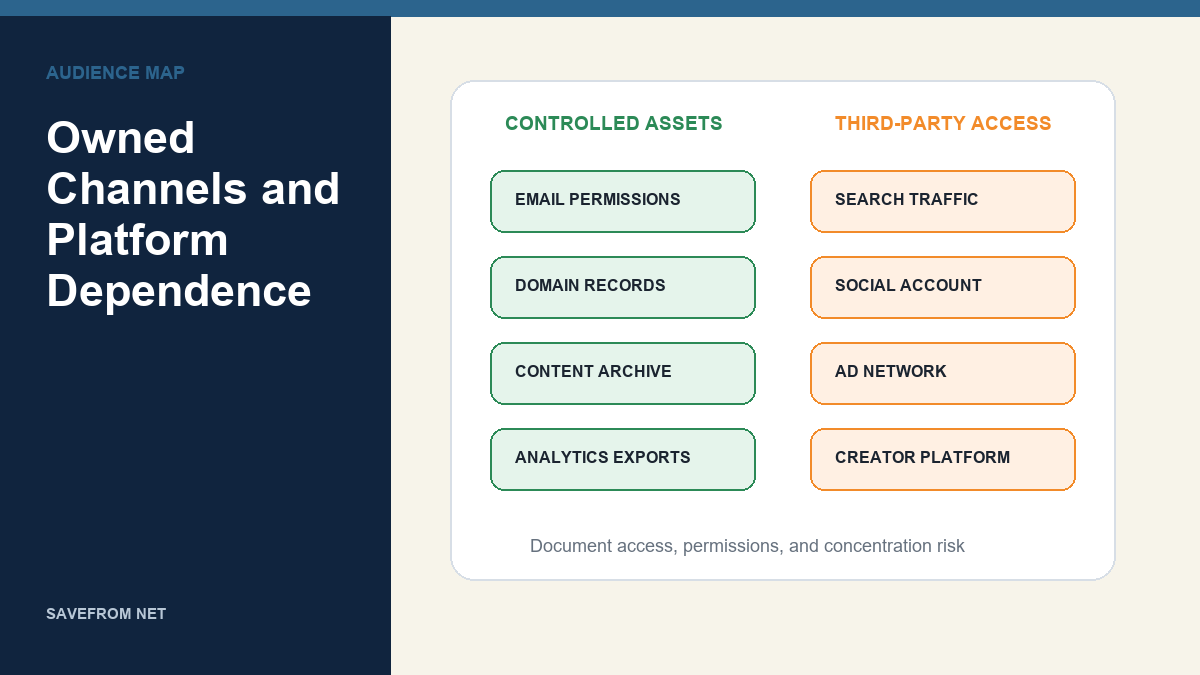
Platform dependence further complicates this dynamic. If a digital publication derives the majority of its traffic from a single search engine algorithm or a specific social media feed, the operation remains highly vulnerable to policy updates and algorithm adjustments. This vulnerability means that past performance cannot serve as a guaranteed predictor of future success.
Operators can reduce platform dependence in part by organizing a personal media library that remains accessible outside any one distribution platform. Clear internal structures do not eliminate third-party risk, but they make the operation easier to understand and manage.
Owned Audiences vs Third-Party Reach
In the digital media space, a sharp distinction must be drawn between an owned audience and third-party reach. An owned audience typically consists of direct email subscribers, registered community members, and individuals who bypass search engines to visit a publication directly. These direct connections represent a stable, accessible base of consumers that the operator can reach without navigating external gatekeepers.
Conversely, third-party reach relies entirely on the infrastructure provided by external platforms. While these platforms can facilitate massive distribution, the operator merely rents access to that audience. The platform retains ultimate control over who sees the content and under what conditions. This lack of control fundamentally alters the risk assessment of the digital enterprise.
The U.S. Small Business Administration, Close or sell your business guide notes that the SBA describes income, market, and asset approaches as possible valuation starting points and recommends determining value before a sale. When applying these approaches to a digital entity, the proportion of owned versus rented audience significantly impacts the risk profile and the resulting assessment.
Content Rights and Audience Evidence
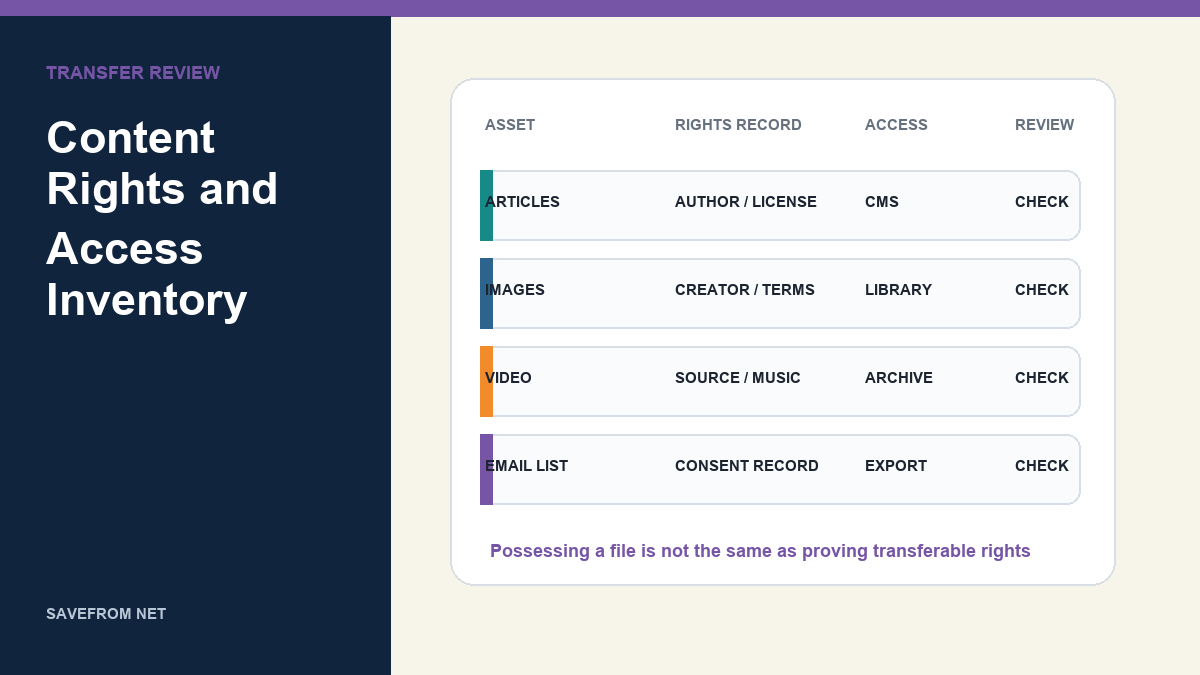
The possession of digital files does not automatically equate to commercial ownership. In the realm of digital media, content rights represent the legal authority to publish, distribute, and monetize intellectual property. A comprehensive evaluation requires strict verification of these rights, separating the physical or digital possession of assets from the legal capacity to utilize them for commercial gain.
Meticulous records help establish the chain of title for digital assets. The U.S. Copyright Office, Copyright Basics explains that copyright ownership and ownership of a physical or digital copy are distinct. Transfers and ownership documentation therefore warrant careful review, with qualified legal counsel addressing the facts of a specific asset.
Comparative Asset Control
| Asset Category | Control Level | Documentation Required | Operational Impact |
|---|---|---|---|
| Original Written Content | High (Owned) | Work-for-hire agreements, copyright registrations | Forms the core intellectual property base and drives long-term organic discovery. |
| Social Media Following | Low (Rented) | Platform terms of service, account access logs | Provides high visibility but remains subject to algorithmic suppression and policy changes. |
| Direct Email Subscribers | High (Owned) | Opt-in records, privacy policy compliance logs | Ensures direct, unfiltered communication with the core audience regardless of platform shifts. |
| Licensed Stock Media | Medium (Restricted) | Commercial licensing agreements, usage limits | Enhances visual presentation but cannot be exclusively claimed or universally transferred. |
Privacy in Subscriber Data Handoffs
As digital media operations grow, they inevitably accumulate significant amounts of subscriber data. The handling, storage, and potential transfer of this data introduce complex privacy considerations. When evaluating the operational procedures of a digital entity, the integrity of its data management practices must be scrutinized. Mishandling subscriber information can lead to severe reputational damage.
The Federal Trade Commission, Protecting Personal Information: A Guide for Business advises businesses to know what personal information they hold, keep only what they need, protect it, and dispose of it appropriately. No platform choice proves compliance by itself. Each operation needs procedures suited to the data it holds and the laws that apply to it.
When considering a digital media website ownership handoff file, operators must carefully evaluate the terms under which subscriber data was originally collected. Privacy policies often dictate whether and how data can be transferred to a new operating entity.
Operational Systems and Owner Dependence
A thriving digital media enterprise relies on robust operational systems rather than the sheer willpower of a single individual. Owner dependence represents a significant structural weakness. If the daily operations, content creation, and technical maintenance rely entirely on the specialized knowledge or personal relationships of the current operator, the enterprise’s independent functionality is severely compromised.
To assess the true strength of the operation, one must examine the documented processes and workflows. Are there clear editorial guidelines? Are technical maintenance routines standardized and documented? Can a trained professional step in and manage the daily tasks without requiring constant intervention from the original creator?
Consider the broader context of enterprise evaluation. When exploring what a small business may be worth, operators often discover that well-documented, independent systems significantly enhance the stability of the enterprise. This principle applies equally to digital media portfolios.
Operational independence is a matter of degree, not a label. The central question is whether trained people can follow the documented workflows and maintain essential functions when responsibilities change.
Valuation: Multiples vs Market Reality
A common misconception in the digital media sector is that a simple formula can dictate enterprise value. Operators frequently search for a universal revenue or profit multiple, hoping to find a straightforward answer. In practice, a useful evaluation has to address the operation’s specific financial record, assets, risks, transferability, and market context.
An Internal Revenue Service legal memorandum discussing Revenue Ruling 59-60 illustrates the fact-specific nature of valuation and the limits of relying on a single general formula. It is an IRS legal memorandum, not a universal appraisal standard for every purpose.
Hypothetical Valuation Scenario
To illustrate the complexities involved, consider this strictly hypothetical scenario. This is an illustrative example only and does not represent a market benchmark or a formal appraisal conclusion.
Imagine two hypothetical digital media entities, each generating $200,000 in annual revenue:
- Scenario A: Traffic depends almost entirely on one social algorithm, the hypothetical profit margin is 20 percent, and the owner spends 60 hours a week maintaining output.
- Scenario B: Traffic comes from search, direct email, and referrals, the hypothetical profit margin is 40 percent, and documented systems and contractors reduce owner oversight to 15 hours a week.
Despite identical hypothetical revenue, the risk profiles and operating structures differ. A single multiple cannot capture those differences. Better records, systems, rights documentation, traffic diversity, or retention may clarify the evidence, but none guarantees a particular value or sale.
Essential Documentation Checklist
When preparing for a significant transition or operational review, a clear collection of records helps others understand what the business owns, licenses, controls, and depends on. Organized evidence can also make due diligence questions easier to answer.
Digital Media Records Checklist
- Verify and compile all domain name registration records, ensuring administrative control is established.
- Gather all primary hosting agreements, server configurations, and technical infrastructure documentation.
- Compile a complete inventory of original content, including dates of publication and authorship records.
- Collect all freelance contractor agreements, focusing on work-for-hire clauses and intellectual property assignment.
- Assemble all third-party software licenses, API access keys, and subscription service agreements.
- Document the complete subscriber database, including exact opt-in records and privacy policy consent logs.
- Provide verifiable analytics data, demonstrating traffic sources, user engagement, and audience demographics.
Digital Business Valuation FAQ
Is a business worth three times profit?
No single multiplier can accurately determine the value of a digital media enterprise. Valuations are fact-specific and depend entirely on the unique characteristics of the operation, including revenue diversity, audience retention, and the transferability of systems. A rigid multiple fails to account for these critical operational variables.
How much is a business worth with $500,000 in sales?
Revenue alone does not dictate enterprise value. Two businesses with identical sales figures can have vastly different risk profiles, profit margins, and operational dependencies. A thorough assessment must analyze the stability of the income streams, the costs required to generate those sales, and the underlying legal rights to the digital assets.
How much is a business worth that makes $300,000 a year?
Determining value requires an analysis of how that income is generated. If the earnings rely heavily on a single individual or a volatile third-party platform, the associated risk is high. A proper evaluation requires a comprehensive review of the operational systems, intellectual property ownership, and historical financial consistency rather than relying on a top-line figure.
How much is a business worth with $1 million in sales?
A high sales volume must be contextualized by examining the profit margins and structural stability of the digital entity. An evaluation must separate preliminary planning estimates from a formal appraisal, focusing on the specific facts of the business, such as audience ownership, content rights, and the diversification of traffic sources.
How do I calculate the value of my business?
Calculating the value requires a structured assessment of your digital assets, revenue consistency, and operational independence. Operators should review their content rights, audience data, and documented processes. Because valuations are deeply fact-specific, individuals should consult with qualified professionals to analyze the unique details of their specific enterprise rather than relying on generalized formulas.




0 Comments